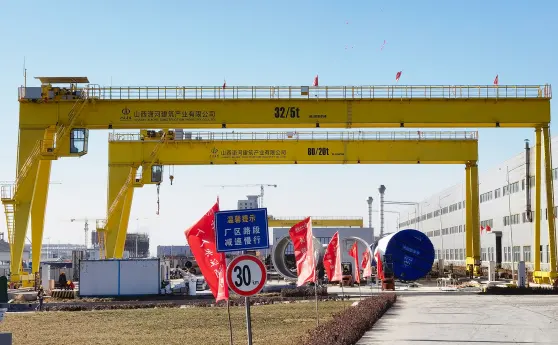
Single Girder vs Double Girder Overhead Crane A Complete Comparison
Overhead crane is the core equipment for industrial material handling, and the selection of single girder and double girder models is crucial, directly affecting operational efficiency, operating costs, and site adaptability. Practitioners and buyers in industries such as mechanical manufacturing and metallurgy can improve handling efficiency by selecting the right machine model, while choosing the wrong one can easily result in low operational efficiency and additional cost increases.
This article will introduce the differences between the two from the aspects of design, performance, scenario, cost, and maintenance, hoping to help buyers choose.
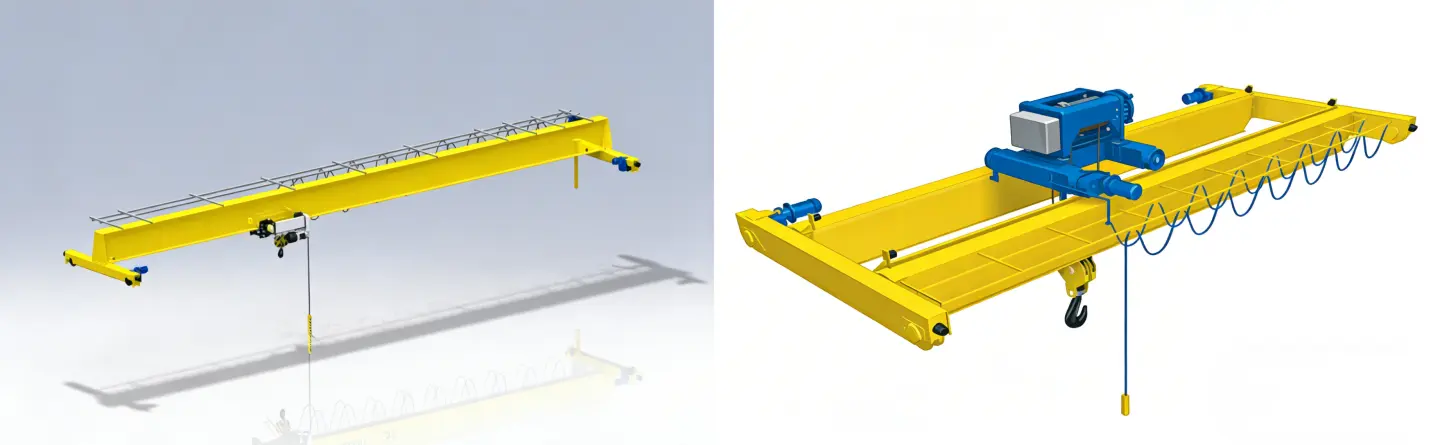
Core design and structural differences
The single girder overhead crane adopts a single main girder design, with the main girder directly erected on both side end beams. The lifting trolley runs along the lower flange of the main girder, and the overall structure is simple and compact. The body weight is lighter, and the building load-bearing requirements for the factory are lower, making it more suitable for working environments with limited space.
The double girder overhead crane is equipped with two main girders, which are connected by end beams to form a stable frame structure. The lifting trolley is erected between the two main girders for operation, resulting in stronger overall stability and better load-bearing capacity of the equipment.
| Item | Single Girder Overhead Crane | Double Girder Overhead Crane |
| Lifting Capacity & Span |
Lifting capacity: 0.5–20 tons Span: 7.5–22.5 meters |
Lifting capacity: 5 tons to hundreds of tons Span: 10–35 meters and larger |
Precision & Stability |
Light weight, simple drive structure, high flexibility. Convenient positioning for small-range, high-frequency light-duty handling, improving efficiency for small parts. |
Dual-girder frame structure enhances anti-deformation and anti-swing performance. Stable trolley travel, high hoisting precision, effectively reducing risks from load swing in heavy-duty, long-span operations. |
Applicable scenarios
The core principle of selecting a crane is to adapt the equipment to the usage scenario, and precise matching is necessary to maximize the value of the crane equipment.
| Type | Suitable Scenarios for Single Girder Overhead Crane | Suitable Scenarios for Double Girder Overhead Crane |
| Operation Type | Medium and small tonnage, high-frequency daily material handling, such as workpiece transfer in machining workshops, equipment parts hoisting in electronics factories |
Heavy lifting operations with large tonnage and long span, such as hoisting large components in metallurgy, shipbuilding, and heavy machinery manufacturing |
| Workshop Conditions | Small and medium-sized factories with limited space and general building bearing capacity, such as small processing plants, warehouses, and light industrial workshops |
Large industrial factories with sufficient space and strong bearing capacity, such as steel plants, large machinery factories, and port industrial parks |
| Operation Parameters | Small span, low lifting height requirements, suitable for production line supporting hoisting and warehouse goods loading/unloading |
High requirements for hoisting precision and stability, such as precision equipment installation, port heavy cargo handling, and power industry boiler maintenance |
| Enterprise Needs | Small and medium-sized enterprises pursuing cost-effectiveness with no requirements for equipment expandability or large tonnage operations |
Enterprises pursuing intelligent operations, capable of installing various safety protection and intelligent control systems, suitable for modern intelligent production |
Cost and post maintenance
The cost difference between single girder and double girder cranes in procurement, installation, maintenance and other aspects is also an important consideration factor for enterprise selection.
Initial procurement cost
The single girder overhead crane has a simple structure, uses less materials, and has a much lower procurement cost than double girder models of the same span. It is easier to install and construct, has a shorter installation cycle, and can effectively save installation and infrastructure costs. It is suitable for small and medium-sized enterprises with limited budgets.
Double girder overhead cranes require a professional construction team due to their complex structure, high material usage, higher procurement costs, and more complicated installation processes. The overall investment in procurement, installation, and infrastructure construction in the early stages is higher.
Post maintenance costs
The mechanical structure of a single girder crane is simple, with few daily maintenance points and low difficulty. Maintenance personnel do not require high professional skills, resulting in lower maintenance costs and higher maintenance efficiency in the later stage.
The structure of a double girder crane is complex and requires regular maintenance and upkeep by professional technicians, resulting in relatively higher maintenance costs in the later stages.
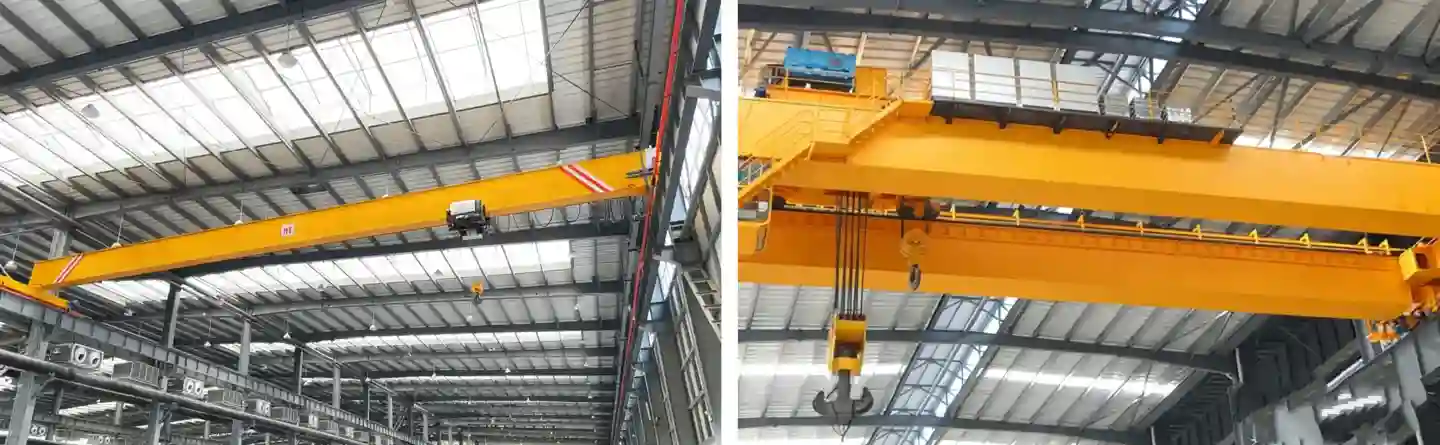
Core principles of selection
After reading the above comparison, many buyers may still have selection confusion. In fact, as long as they focus on the three core principles of "looking at demand, looking at venue, and looking at budget", they can quickly finalize the compatible models.
| Selection Criteria | Single Girder Overhead Crane | Double Girder Overhead Crane |
| Operation Requirements | Ideal for medium & small tonnage daily material handling | Essential for large tonnage, high precision, and long-span heavy-duty operations |
| Workshop Conditions | Preferred for limited space and standard load-bearing capacity | Suitable for spacious workshops with sufficient load-bearing capacity |
| Budget & Long-term Planning | Cost-effective choice for limited budget and no intelligent expansion needs | Recommended for sufficient budget and long-term plans for production expansion & intelligent operation |
In conclusion
There is no absolute superiority or inferiority between single girder overhead cranes and double girder overhead cranes, only whether they are suitable. Choosing the right crane can not only improve operational efficiency, but also ensure production safety and control operating costs. I hope the introduction in this article can help make the most reasonable selection decision.
If you still have questions, you can consult professional crane manufacturing companies at any time for one-on-one professional selection guidance.
What is a new Chinese style crane?
What is a semi gantry crane?